Titanium Etching Services & Processes
Precision Titanium Components for Demanding Applications

Titanium etching, also known as photochemical etching, is a precision manufacturing process that uses chemical solutions to selectively remove material from titanium sheets without mechanical force or heat, producing intricate, burr-free parts with tight tolerances. For engineers, designers, and manufacturers spread across a diverse group of critical industries, it offers a practical way to make lightweight, corrosion-resistant titanium components with complex geometries that are difficult or costly to achieve with conventional methods.
Titanium is one of the most valuable engineering materials available today, offering an exceptional combination of strength, lightweight performance, corrosion resistance, and durability. From aerospace structures and defense systems to medical devices, semiconductor equipment, and renewable energy technologies, titanium components are trusted wherever performance and reliability are critical. While titanium’s properties make it an excellent choice for challenging environments, they can also make conventional manufacturing methods difficult and expensive, and when titanium is exposed to air, it naturally forms a dense oxide layer that can make downstream etching more challenging. CNC machining, stamping, and laser cutting may introduce burrs, heat-affected zones, or mechanical stresses that compromise delicate features and increase finishing requirements.
Our guide jumps into those intricacies of how the titanium etching process works, why titanium’s material properties and grades matter, where etched titanium parts are used, and what design considerations affect manufacturability and cost. It also outlines the advantages of working with Elcon Precision for titanium etching when your application demands high accuracy, repeatability, and dependable production quality.
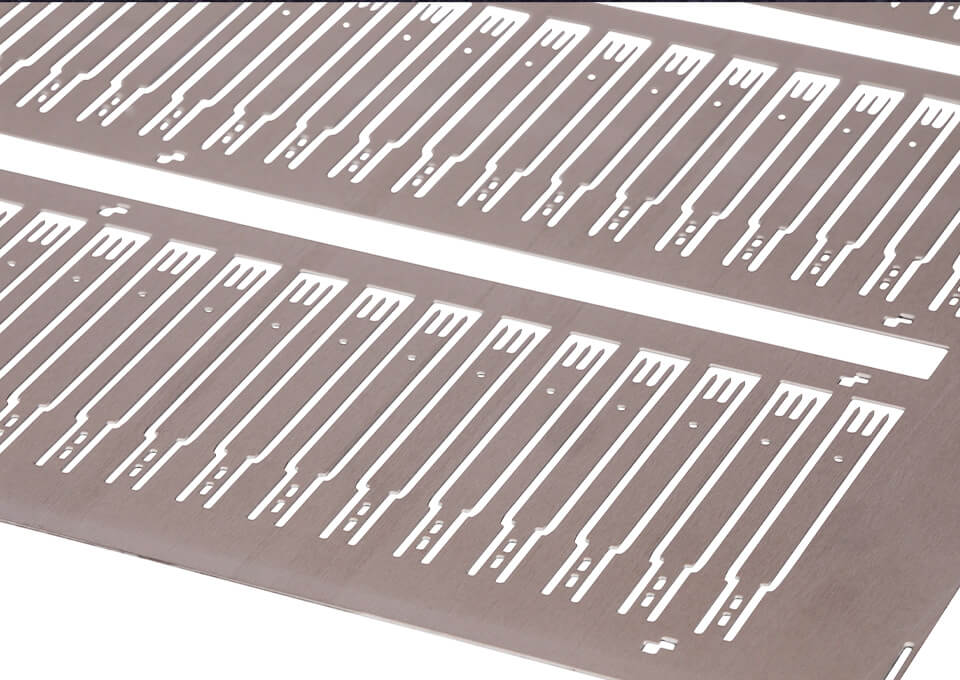
Why Engineers Choose Titanium
Titanium has earned its reputation as a “wonder metal” because it delivers a unique balance of mechanical and chemical properties that few other materials can match.
Its high strength-to-weight ratio enables engineers to reduce component weight without sacrificing structural integrity, making titanium an ideal material for aerospace, defense, and transportation applications. Compared to heavier metals, titanium supports lightweight designs that improve efficiency and reduce fuel consumption.
Titanium also offers outstanding corrosion resistance in harsh chemical and marine environments. Its naturally occurring oxide layer protects the metal against corrosion, making titanium suitable for components exposed to aggressive chemicals, moisture, and corrosive environments throughout their service life.
Another significant advantage is excellent heat resistance. Many titanium alloys maintain strength and stability at elevated temperatures, supporting high-performance applications in aerospace engines, thermal systems, and industrial processing equipment.
For medical applications, titanium’s exceptional biocompatibility makes it a preferred material for implants, surgical instruments, and orthopedic devices because it integrates well with human bone while resisting corrosion inside the body.
What Is Titanium Etching?
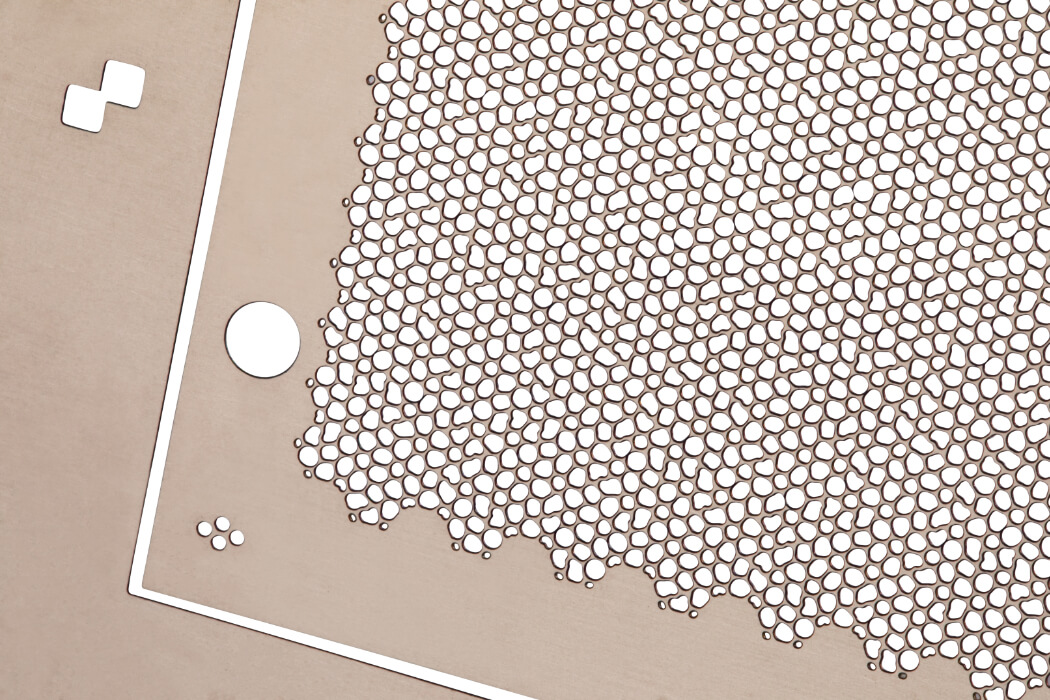
Chemical etching titanium is a precision manufacturing process that removes material without mechanical force or thermal distortion. Using photochemical machining, a photoresist pattern is applied to a titanium sheet before an etching solution selectively dissolves exposed metal to create the desired component geometry.
Unlike machining or laser cutting, the titanium etching process does not generate cutting forces, tool wear, or heat-affected zones. Instead, material is removed uniformly, allowing manufacturers to produce highly detailed features while preserving the original properties of the titanium alloy.
The process is especially effective for thin-gauge titanium components that require complex geometries, intricate openings, fine meshes, or detailed patterns that would be difficult or costly to manufacture using conventional fabrication methods.
Benefits of Photochemical Etching Titanium
Photochemical etching offers several advantages over traditional manufacturing technologies when producing precision titanium components.
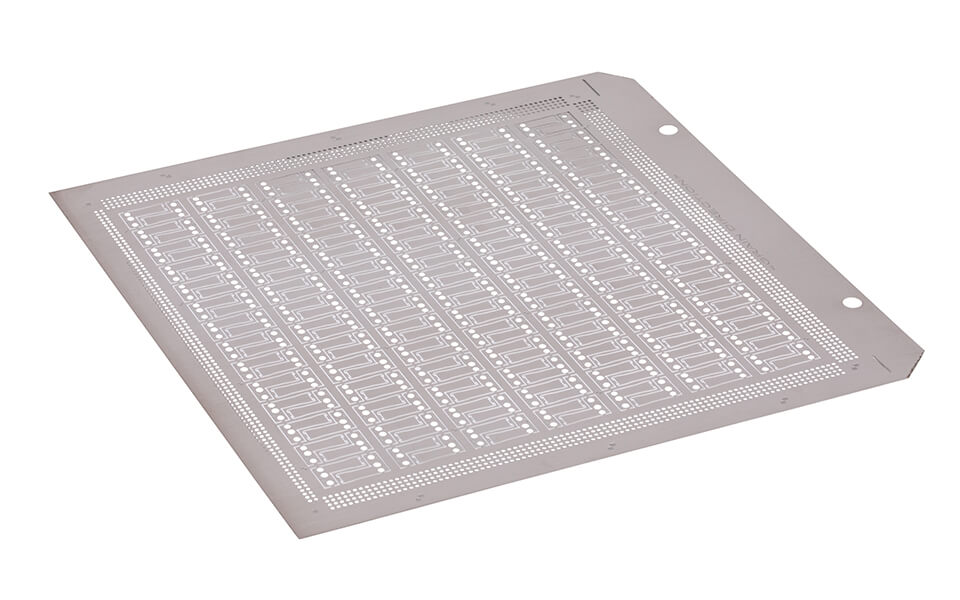
Burr-free, stress-free parts eliminate secondary deburring operations while preserving the material’s structural integrity.
Complex geometries can be manufactured without expensive hard tooling, allowing engineers greater design freedom for intricate components.
Tight tolerances and repeatability ensure consistent quality from prototype through full-scale production.
Because no mechanical force is applied during manufacturing, titanium retains its original strength, fatigue resistance, and corrosion-resistant surface properties.
The process also supports rapid design changes, making it ideal for product development, low-volume production, and iterative engineering programs before transitioning into larger manufacturing runs.
Compared to laser cutting, stamping, or conventional machining, photochemical etching often reduces lead times, minimizes material waste, and lowers tooling costs while maintaining exceptional dimensional precision.
Titanium Grades and Material Options
Selecting the appropriate titanium grade depends on the application’s mechanical requirements, corrosion resistance, and operating environment.
Commercially pure titanium Grades 1 through 4 provide increasing strength while maintaining outstanding corrosion resistance and formability for chemical processing, medical, and industrial applications.
Grade 5 titanium (Ti-6Al-4V) is the industry’s most widely used titanium alloy because it combines excellent strength, fatigue resistance, and lightweight performance for aerospace, defense, and high-performance industrial components.
Elcon Precision also supports specialized titanium alloys, including Nitinol for advanced medical and engineered applications, along with DFARS-compliant titanium materials for defense manufacturing programs requiring domestic sourcing and regulatory compliance.
Applications for Etched Titanium Parts
Titanium etching supports a broad range of industries where precision, reliability, and performance are essential.
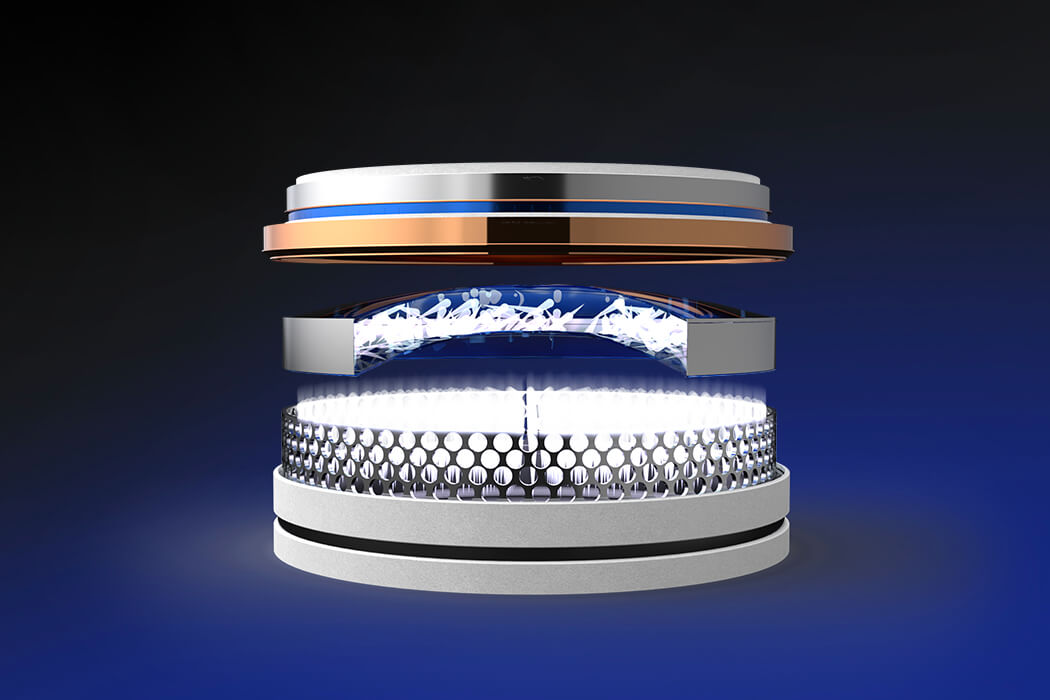
Aerospace and Defense manufacturers rely on etched titanium components for lightweight structural assemblies, electronic shielding, precision filters, sensor components, and RF systems where dimensional accuracy and reduced weight improve overall system performance.
Medical Device manufacturers use chemically etched titanium to produce surgical instruments, implantable components, medical meshes, and specialized devices that benefit from titanium’s biocompatibility and corrosion resistance.
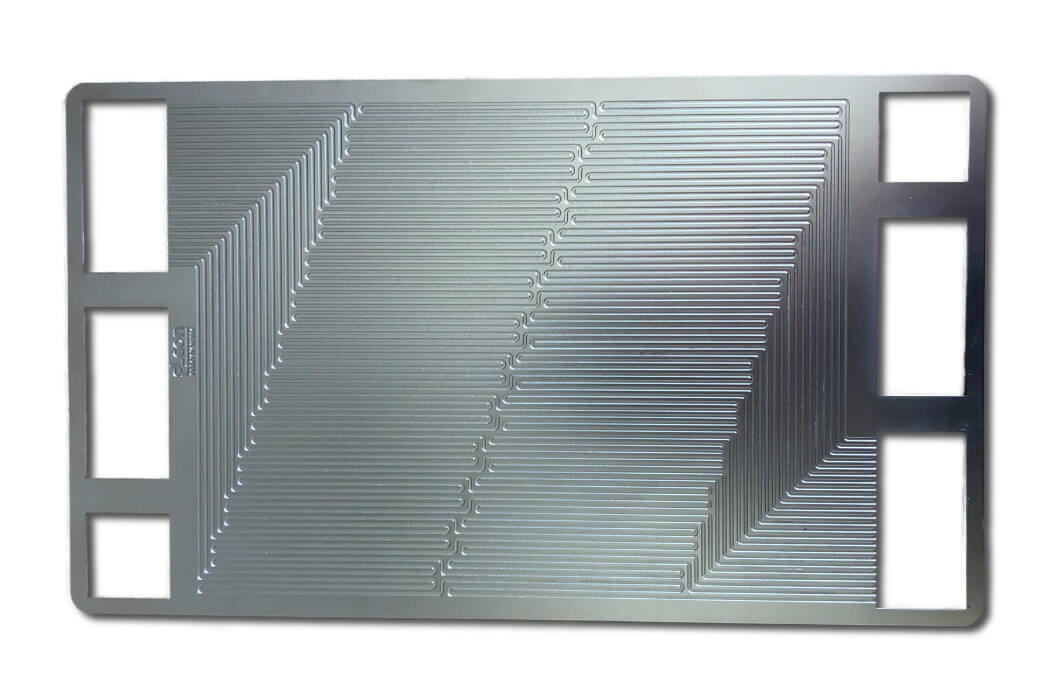
Energy and Renewable Energy applications include fuel cells, electrolyzers, heat exchangers, bipolar plates, and other precision metal components that must withstand corrosive operating conditions while maintaining long-term reliability.
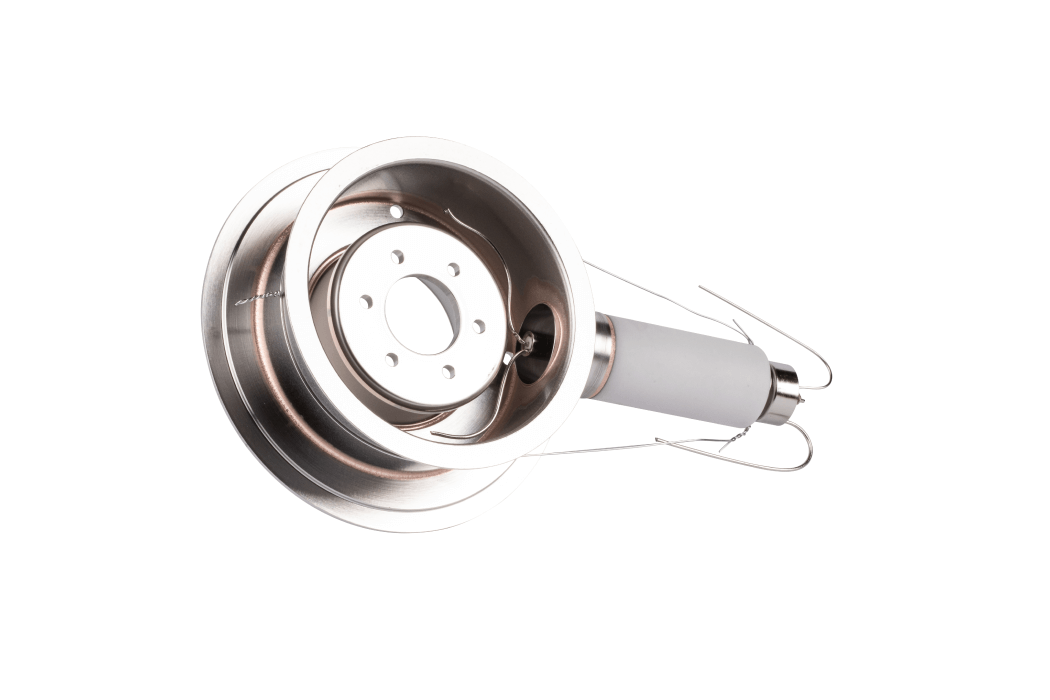
Semiconductor and Electronics manufacturers utilize etched titanium parts in vacuum-compatible assemblies, precision thermal management systems, and equipment requiring exceptionally clean, high-precision metal components.
Design Considerations for Titanium Etching
Designing components specifically for photochemical etching helps maximize manufacturability while achieving optimal performance.
Engineers should consider material thickness, minimum feature sizes, hole diameters, and etch factor when developing titanium components. Proper design allows intricate features to be manufactured efficiently while maintaining dimensional consistency across production volumes.
Because photochemical machining removes material uniformly from both sides of the sheet, designers can create highly detailed geometries that would be difficult to achieve through machining or stamping. Early collaboration during the design phase also helps optimize tolerances, improve manufacturability, and reduce production costs.
Whether supporting rapid prototypes or full production programs, Elcon Precision works closely with engineering teams to ensure designs are optimized for precision chemical etching.
Why Partner with Elcon Precision?
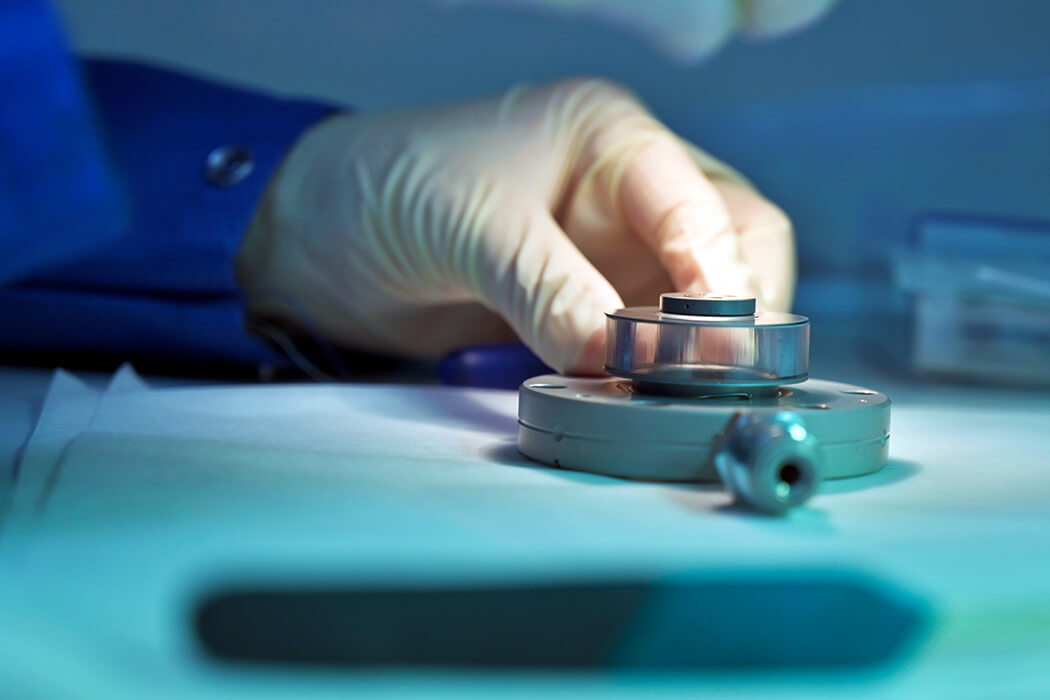
For more than 50 years, Elcon Precision has specialized in photochemical machining for high-performance industries requiring precision, consistency, and quality.
Our capabilities include chemical etching of commercially pure titanium grades, titanium alloys, and specialty materials in thicknesses up to 0.040 inches, with sheet sizes up to 22 × 12 inches. We manufacture complex titanium components featuring intricate geometries, burr-free edges, and tight tolerances for prototype and production quantities.
Supported by ISO 9001 and AS9100 quality management systems, ITAR registration, and extensive aerospace and defense manufacturing experience, Elcon Precision delivers precision metal components that meet demanding performance and regulatory requirements.
Our engineering team partners with customers throughout the product development process—from design optimization and material selection to scalable production—helping ensure each titanium component is manufactured for maximum performance, reliability, and manufacturability.
Request a Quote for Precision Titanium Etching
Whether you’re developing aerospace hardware, medical devices, semiconductor equipment, or next-generation energy systems, Elcon Precision provides the expertise to manufacture precision-etched titanium components that meet your exact specifications.
Contact our engineering team today to discuss your application, review your design, or request a quote for titanium etching and photochemical machining services.


