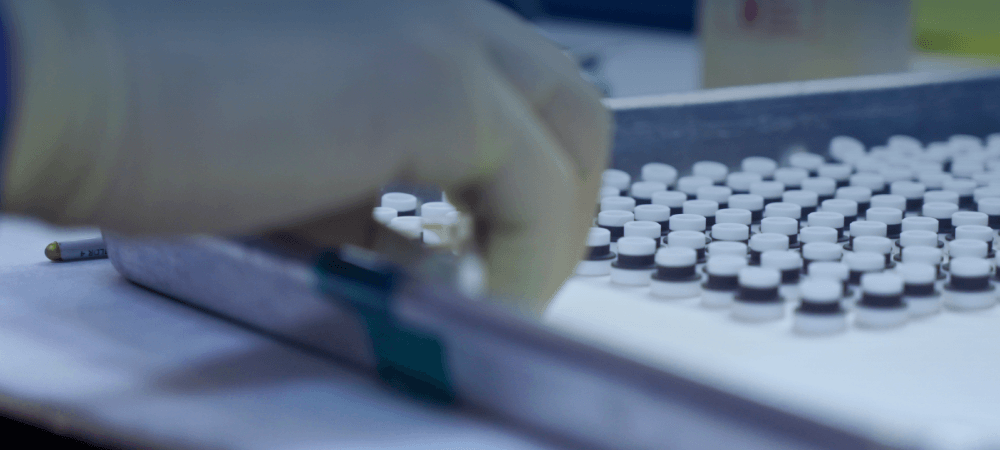
Precision Components at the Heart of Small Modular Reactors (SMR) Subsystems
The global shift toward advanced nuclear technologies has accelerated the development of Small Modular Reactors (SMRs). Designed for scalability, enhanced safety, and modular deployment, SMRs introduce new engineering demands across thermal, structural, and fluid-handling subsystems.
SMRs are defined as nuclear reactors generally 300 MWe equivalent or less, designed with modular technology using module factory fabrication. Their smaller capacity allows for deployment in settings where large nuclear power plants may not be practical, such as remote communities, industrial clusters, or regions with small electricity grids. SMRs can be sited on locations not suitable for larger nuclear power plants due to their smaller footprint and reduced land requirements. They are designed to be factory-fabricated and transported to the installation site as prefabricated modules, allowing for streamlined construction and enhanced scalability. Many SMR designs rely on a modular system, enabling customers to add modules to achieve a desired electrical output. The modular construction of SMRs improves quality control, shortens on-site construction times, and can reduce overall capital costs. SMRs are expected to provide reliable low-carbon power, supporting the transition to clean nuclear energy. The nuclear industry is actively advancing SMR technology, with capital costs and deployment flexibility being key considerations. Advanced reactor concepts, including SMRs and microreactors, are central to the modernization of nuclear energy. The licensing process for SMRs is based on rigorous, independent analysis and review of all critical structures, systems, and components for nuclear safety under normal and accidental conditions. The U.S. Nuclear Regulatory Commission (NRC) plays a vital role in defining SMR licensing, ensuring safety, and facilitating the development of these innovative nuclear energy systems.
While reactor physics and core design often receive the spotlight, subsystem performance ultimately depends on precision-engineered components. Heat transfer plates, flow distribution elements, structural supports, shielding components, and instrumentation housings must operate reliably under:
- High temperatures and steep thermal gradients
- Elevated pressures and cyclic mechanical loads
- Radiation exposure and corrosive environments
- Tight geometric constraints within modular assemblies
For nuclear and mechanical engineers, the challenge is clear: subsystem reliability is inseparable from component-level precision. Manufacturing methods, material selection, and tolerance control directly influence thermal efficiency, structural integrity, and long-term safety.
This article explores how precision fabrication, particularly photochemical etching, tight-tolerance machining, metallization, brazing, and engineered assemblies, supports the demanding requirements of SMR subsystems.
Key Engineering Challenges in SMR and Advanced Nuclear Reactors Subsystems
Thermal Management Under Extreme Conditions
SMR subsystems must manage high heat flux and significant thermal gradients. Thermal interface plates, flow distribution components, and heat exchanger elements must:
- Maintain dimensional stability at elevated temperatures
- Accommodate differential thermal expansion
- Preserve flatness for effective thermal contact
- Resist creep and long-term degradation
In addition to electricity generation, SMRs can be designed to provide process heat for industrial applications.
Small geometric deviations can disrupt contact resistance or flow distribution, reducing efficiency or creating localized hot spots.
Structural Integrity in High-Pressure Environments
Many SMR subsystems operate under high internal pressures and cyclic loading conditions. Structural elements, frames, brackets, supports, and containment-related components must:
- Maintain tight tolerances under load
- Resist fatigue and vibration
- Avoid stress concentrations introduced during fabrication
- Integrate precisely within modular assemblies
SMR designs often emphasize inherently safe operating pressure to enhance structural integrity and overall reactor safety.
Thin sections and complex geometries require manufacturing processes that minimize residual stress and distortion.
Fluid Flow Optimization
Flow-critical components are central to heat removal and system stability. Distribution plates, etched channels, baffles, and manifolds must ensure:
- Uniform flow distribution
- Minimal pressure drop
- Controlled turbulence where required
- Leak-tight sealing at high pressures
Many SMR designs utilize natural circulation to optimize coolant flow and enhance passive safety.
Micro-scale surface finish and feature precision significantly influence flow behavior, particularly in compact modular designs.
Radiation, Corrosion, and Long-Term Durability
Materials in SMRs face radiation exposure, temperature cycling, and chemically aggressive coolants. Over decades of operation, these factors can affect:
- Mechanical strength
- Dimensional stability
- Surface integrity
- Electrical performance in instrumentation shielding
Component design must account for both initial performance and long-term degradation. SMRs often rely on passive systems to maintain safety and durability over decades of operation.
Materials and Fabrication Techniques for Critical SMR Components
Material Selection for Extreme Environments
Common materials for SMR subsystem components include:
- Austenitic and martensitic stainless steels
- Nickel-based alloys for high-temperature strength
- Corrosion-resistant alloys for aggressive coolant environments
- Specialty metals for shielding or electrical performance
Material selection must consider thermal expansion coefficients, creep resistance, corrosion behavior, and radiation stability. Precision manufacturing processes must preserve these material properties without introducing microstructural damage. Material selection must also account for the core power output of the reactor, as higher core power can increase thermal and mechanical stresses on components.
Photochemical Etching for Thin, High-Precision Components
Photochemical etching (PCE) is particularly well suited for thin metal plates and intricate geometries used in SMR subsystems. It enables:
- Burr-free, stress-free fabrication
- Complex channel patterns for flow control
- Fine features without tool-induced deformation
- Tight dimensional tolerances across thin sheet materials
Etched plates can serve as:
- Flow distribution plates
- Thermal interface components
- Fine-feature shielding elements
- Intricate baffles or flow-guiding structures
- Components in steam generator assemblies for efficient heat transfer
Because PCE is a chemical process rather than a mechanical one, it minimizes residual stresses that could otherwise distort thin parts or compromise long-term stability.
CNC Machining, Forming, and Precision Fabrication
For structural or load-bearing components, tight-tolerance CNC machining provides:
- Accurate alignment features
- Precision sealing interfaces
- Controlled flatness and perpendicularity
- Robust mechanical integrity
Advanced forming and fabrication methods support thin sheet metal components such as brackets, supports, and enclosures, maintaining tight tolerances while reducing distortion.
Precision fabrication of these components is essential for the reliable assembly and operation of the entire plant.
Metallization and Brazing for High-Reliability Assemblies
Leak-critical or high-temperature assemblies often require metallized surfaces and brazed joints. These processes provide:
- Hermetic sealing
- High-strength joints without excessive distortion
- Reliable bonding across dissimilar materials
- Stable performance under thermal cycling
In SMR subsystems, metallized or brazed elements are frequently used in integrated flow components, instrumentation housings, and temperature-sensitive assemblies. Many SMR designs also incorporate passive safety systems that do not require external power for safe shutdown or operation.
Where Precision Components Are Used in SMR Subsystems for Power Generation
Precision-manufactured components appear across nearly every subsystem in an SMR:
SMRs can be used for power generation, process heat, desalination, or other industrial uses, and may also be designed purely for desalination or facility heating rather than electricity. Some SMR designs are aimed at providing high-temperature heat for hydrogen production and other industrial operations, supporting synthetic fuel manufacturing. SMRs can provide energy for the net-zero manufacture of green hydrogen and synthetic fuels. They are also expected to support district heating, desalination, and hydrogen production as cogeneration options. The role of SMRs in electricity generation and power generation is significant, as they offer clean, reliable, and scalable solutions for a variety of sectors, including remote and industrial sites.
Thermal Subsystems
Flatness, surface finish, and channel accuracy directly influence heat transfer efficiency.
Additionally, many SMR designs rely on a modular system that allows for incremental power additions, enabling customers to scale up capacity by simply adding modules as needed.
Structural Subsystems
- Precision brackets and frames
- Alignment elements
- Supports for core-adjacent assemblies
- Load-bearing sheet metal components
Tight tolerances ensure proper load distribution and modular fit-up.
Flow-Critical Subsystems
- Etched channels for coolant distribution
- Flow-guiding baffles
- Precision orifice plates
- Thin sheet metal manifolds
Small geometric deviations can alter flow regimes and pressure drop characteristics.
Additionally, flow-critical components in SMRs are often designed to support passive cooling, enhancing safety by enabling heat removal without active systems.
Instrumentation and Control
- Shielding components for sensors
- EMI/RFI shielding enclosures
- Precision housings for instrumentation
- Mechanically integrated sensor assemblies
Shielding and enclosure elements must balance dimensional accuracy with thermal and electrical performance.
Additionally, SMR instrumentation and control systems are often designed to operate safely without the need for active human intervention, relying on passive safety systems to maintain safety in emergency situations.
Hybrid and Integrated Assemblies
Modern SMR designs increasingly rely on compact, multi-functional assemblies combining etched plates, machined components, and brazed joints into leak-critical subsystems. Precision alignment and process control are essential to ensure repeatability across modular fleet deployment.
These modular, integrated assemblies in SMRs also contribute to reduced capital investment by streamlining construction and deployment.
How Precision Manufacturing Solves SMR Subsystem Challenges with Passive Safety Features
Tight Tolerance Management
Precision fabrication controls tolerance stack-up in modular reactor assemblies. Careful dimensional control supports:
- Pressure sealing
- Thermal interface performance
- Proper alignment during module integration
- Reduced rework during assembly
Leak-Free Fluid Performance
Flow-critical components must maintain consistent geometry under pressure and temperature cycling. High-precision etching and machining improve:
- Sealing reliability
- Uniform channel dimensions
- Repeatable flow characteristics
Residual Stress Minimization
Stress-free or low-stress processes are particularly important for thin components exposed to thermal cycling. Minimizing fabrication-induced stresses enhances:
- Dimensional stability
- Fatigue life
- Resistance to warping during operation
Enabling Complex Geometries
Photochemical etching enables complex internal features and fine geometries that may be impractical with conventional machining. This allows engineers to optimize flow paths and thermal interfaces without compromising manufacturability.
Repeatable Production for Modular Deployment
SMR economics depend on repeatable, high-quality component production. Precision-controlled processes ensure consistent performance across multiple modules, critical for fleet-based deployment strategies.
Design & Process Considerations for Engineers
For engineers designing SMR subsystems, early manufacturing collaboration is essential.
Collaboration with municipal power systems is increasingly important for integrating SMRs into local energy grids.
Material Selection
Consider:
- Operating temperature range
- Thermal expansion compatibility
- Pressure loads
- Radiation exposure
- Corrosion environment
Material behavior under combined stresses should guide process selection.
Choosing the Right Fabrication Method
- Photochemical etching for thin, intricate, burr-free features
- CNC machining for structural, sealing, and high-load components
- Forming and fabrication for sheet metal brackets and enclosures
- Metallization and brazing for leak-tight or temperature-critical assemblies
Tolerance Stack-Up Analysis
In modular reactor assemblies, cumulative tolerances can affect alignment, sealing, and structural loading. Early tolerance analysis helps prevent downstream integration challenges.
Surface Finish & Micro-Features
Flow optimization often depends on micro-scale geometry. Surface roughness, edge quality, and flatness all influence fluid performance and thermal contact resistance.
Design for Manufacturability (DFM)
Engaging manufacturing partners during early design phases allows:
- Geometry refinement
- Process optimization
- Cost control
- Improved lifecycle reliability
Elcon’s Capabilities for SMR Subsystem Components
Elcon Precision supports high-reliability industries, including nuclear, aerospace, and defense, with manufacturing processes tailored for extreme environments.
Elcon plays a key role in supporting the global market for SMRs and advanced reactors by supplying critical components to major developers. We're involved in projects backed by government support, including the U.S. Department of Energy's Advanced Reactor Demonstration Program, and we collaborate with leading research institutions like Idaho National Laboratory. As the industry transitions from prototype reactors to commercial deployment, Elcon’s expertise helps advance SMR technology worldwide, with government support accelerating this shift. The deployment of SMRs and advanced reactors is driven by the need for energy security, ongoing nuclear energy research, and the security and nonproliferation advantages these technologies offer. Elcon’s capabilities address the diversity of reactor concepts, including fast reactors, floating nuclear power plants, and the challenges of nuclear waste management. Currently, operational SMRs include Russia’s floating nuclear power plant Akademik Lomonosov and China’s HTR-PM, with additional projects underway in the US, Canada, and the UK.
For SMR subsystems, Elcon provides:
Photochemical Etching
- Photochemically etched plates for flow and thermal applications
- Thin sheet metal components with intricate geometries
- Fine-feature shielding components
- Burr-free, stress-free thin metal parts
Tight-Tolerance Machining & Fabrication
- Precision structural components
- Alignment-critical assemblies
- High-pressure interface elements
- Complex geometries requiring tight dimensional control
Metallization & Brazing
- Leak-tight assemblies
- High-reliability joints
- Temperature- and pressure-resistant bonded components
- Dissimilar material integration
Engineered Assemblies
- Integrated thermal or flow subsystems
- Mechanically assembled or brazed subassemblies
- Shielded instrumentation housings
- Hybrid assemblies combining etched and machined elements
Beyond fabrication, Elcon partners with engineering teams to optimize material selection, refine tolerances, and improve manufacturability for long-term subsystem performance.
Elcon Is Prepared to Support Your Program, Let Us Show You How
The performance and safety of Small Modular Reactor subsystems depend on precision at every level, from etched flow plates to brazed structural assemblies. Thermal management, structural integrity, fluid control, and shielding performance are all directly influenced by component-level tolerances, material selection, and fabrication methods.
By integrating photochemical etching, tight-tolerance machining, metallization, brazing, and engineered assemblies, Elcon Precision supports SMR designers in developing reliable, high-performance subsystems built for decades of operation.
For engineers designing thermal, structural, or flow-critical components in advanced nuclear systems, early collaboration and precision manufacturing expertise can make the difference between theoretical performance and operational reliability.
Your team can rely on the manufacturing processes and quality practices provided by Elcon Precision, let us show you how.
