Why Joining Methods Matter in Nuclear Systems
In nuclear power systems, whether large-scale reactors, small modular reactors (SMRs), advanced reactors (ARs), or fusion research platforms, component reliability is non-negotiable. The nuclear industry, known for its stringent requirements, demands advanced industrial heating and joining technologies that ensure both reliability and efficiency. Assemblies must withstand intense radiation exposure, elevated temperatures, ultra-high vacuum (UHV) environments, and decades of continuous operation with little to no opportunity for maintenance or replacement.
Across nuclear programs, post-failure analysis frequently points to one root cause: compromised joints or seals. Microcracks, leaks, material degradation, or thermal distortion at joining interfaces can undermine otherwise robust designs. For manufacturers specializing in high-reliability assemblies, such as Elcon Precision, with our long-standing focus on ceramic-to-metal and vacuum-compatible brazed components, mitigating these failure mechanisms is central to our efforts supporting nuclear system performance. Efficiency is also a critical concern in nuclear design, directly influencing energy consumption, processing speed, and overall system reliability.
For these extreme environments, furnace brazing has emerged as the preferred joining method, delivering the hermeticity, metallurgical stability, and long-term reliability nuclear systems demand. At Elcon, we apply tightly controlled furnace brazing processes to produce joints capable of long service life in radiation and vacuum conditions, aligning with the nuclear industry’s role in driving technological innovation, supporting high-quality engineering jobs, and contributing significantly to local and national economies.
What Furnace Brazing is and Why Elcon Excels in Extreme Environments
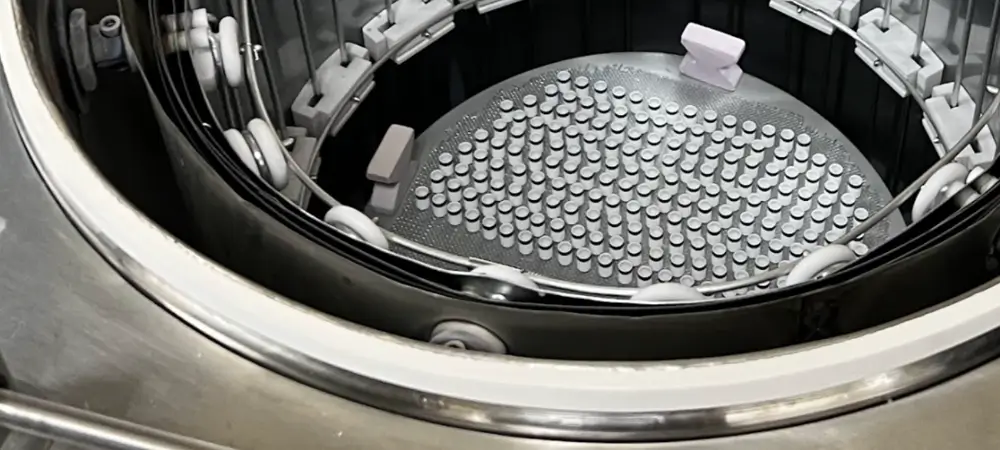
Furnace brazing is a precision joining process in which components are heated uniformly in a controlled atmosphere or vacuum furnace. The heating process is carefully managed to achieve the required temperature level for nuclear applications, ensuring the necessary conditions for material production and chemical synthesis. A carefully selected braze alloy melts and flows via capillary action into the joint interface, creating a strong, continuous metallurgical bond upon cooling.
Key characteristics of furnace brazing include:
- Uniform heating of the entire assembly, eliminating localized thermal gradients
- Predictable, repeatable metallurgy controlled by precise temperature profiles and atmospheres, with the technology behind nuclear furnaces allowing for a high level of precise control over temperature profiles during manufacturing processes
- Low-stress cooling, reducing residual stress compared to welding or torch brazing
- Capillary-driven joint formation, ensuring full joint penetration and consistency
These attributes are particularly important in nuclear environments, where brazed joints must maintain integrity under:
- Radiation bombardment that can embrittle or alter materials over time
- High vacuum or UHV conditions that demand true hermetic seals
- Thermal cycling from startup, shutdown, and operational fluctuations
- Long-term activation and neutron exposure
Elcon Precision’s deep experience in ceramic-to-metal brazing and vacuum furnace processing allows these benefits to be realized consistently, even for complex or high-precision nuclear assemblies.
Nuclear Environment Challenges: What Engineers Must Solve and How We Help
Designing joining solutions for nuclear systems requires overcoming a unique set of challenges:
- High radiation fields can degrade microstructures, weaken joints, or cause embrittlement
- Vacuum environments demand absolute hermeticity, minor leaks are unacceptable
- Neutron flux and activation introduce long-term dimensional and material stresses
- Extended service lifetimes magnify even small joining defects
To ensure protection of personnel, equipment, and the environment, robust safety protocols must be implemented throughout nuclear furnace operations, and that is no exception at Elcon. Effective management of waste is also critical; nuclear energy is the only energy-generating source that fully contains its waste streams, with controlled storage preventing environmental release and ensuring environmental protection.
Traditional joining approaches often struggle here, whether it be welds that crack under thermal cycling. Or mechanical seals can loosen or leak, and unpredictable organic materials degrade rapidly under radiation.
These realities push engineers toward joining methods that are inherently stable, inorganic, and metallurgically sound, setting the stage for furnace brazing as a superior alternative.
Process-Selection Comparison: Brazing vs. Welding vs. Epoxy/Mechanical Joining
Selecting the correct joining process is a critical design decision. For nuclear and high-radiation applications, the differences are stark, and considerations such as cost and energy usage play a significant role in process selection due to their impact on operational efficiency and resource consumption.
Furnace Brazing Advantages
- Hermetic seals routinely achieving leak rates of 10⁻⁹ atm-cc/s or better
- Low thermal distortion due to uniform heating
- Excellent compatibility with ceramics, refractory metals, and specialty alloys
- Ideal for thin-walled, small, or precision assemblies
- Repeatable, production-ready process control
Welding Limitations
- Localized heat input can cause distortion and residual stress
- Risk of microcracking, especially under thermal cycling
- Difficulties joining dissimilar materials (metal-to-ceramic or refractory metals)
- Post-weld cleanup and inspection challenges in high-reliability systems
Epoxies and Adhesives
- Organic materials degrade under radiation
- Outgassing contaminates vacuum systems
- Limited temperature capability and long-term stability
Mechanical Fasteners
- Susceptible to vibration, loosening, and leakage
- Large footprints incompatible with compact nuclear designs
- Poor hermetic performance without secondary sealing methods
For engineers designing components exposed to radiation, vacuum, and long service lifetimes, furnace brazing consistently emerges as the most robust option. This is a technique that requires specialized technicians and a robust team to support your application, a role that Elcon fulfills for customers time and time again.
Why Furnace Brazing Is Optimal for High Radiation & Vacuum Applications
Furnace-brazed joints offer a unique combination of performance characteristics critical to nuclear systems:
- Stable microstructures that resist radiation-induced degradation
- No organic materials, eliminating outgassing and radiation breakdown
- Low residual stress, improving fatigue and thermal-cycle performance
- Wide operating temperature capability
As a result, furnace brazing is widely used for:
- Hermetic electrical feedthroughs
- Radiation detector housings
- Sensor and instrumentation components
- Electron-device structures
- Neutron-imaging assemblies
- SMR and reactor-core instrumentation
These applications rely on brazed joints to perform flawlessly where failure is not an option. At Elcon, we take the previous statement seriously, it's not just a slogan, it's a methodology that requires a commitment to consistency. We pride ourselves on our tenacity to provide the best service on every project we have the privilege to contribute to.
Ongoing research in the field of nuclear furnace technology is focused on developing new ways to improve efficiency, reliability, and sustainability in industrial heating processes. Scientists and engineers are exploring the concept of a Nuclear Furnace to revolutionize energy production in various industries. These advancements have the potential to shape the future of material science, manufacturing, and energy generation, making nuclear furnaces a key area of innovation for the years ahead. Elcon is positioned to support these efforts and is up for the challenges this innovative approach will present.
Material Compatibility: Ceramics, Refractory Metals, and Specialty Alloys
Modern nuclear devices frequently combine dissimilar materials to achieve performance goals, electrical isolation, thermal resistance, structural strength, or radiation tolerance.
Furnace brazing accommodates combinations such as:
- Alumina ceramics for electrical insulation
- Kovar® alloys for matched thermal expansion
- Stainless steels for corrosion resistance
- Refractory metals, including molybdenum and tungsten
Successful joining depends not only on the process but on braze alloy selection, joint design, and thermal expansion matching. Various terms and specifications, such as material compatibility and technological advancements, must be considered to ensure optimal performance. Nuclear Furnaces can also produce materials with enhanced mechanical properties due to precise control over alloy compositions. This is where engineering expertise becomes a decisive advantage. At Elcon Precision, material pairing and braze alloy selection are integral parts of the manufacturing collaboration, not afterthoughts.
Elcon’s Capabilities for Nuclear & High-Reliability Applications
Elcon Precision supports nuclear and radiation-intensive programs with capabilities purpose-built for reliability:
- Vacuum and controlled-atmosphere furnace brazing
- Complex, tight-tolerance assemblies
- Ceramic-to-metal hermetic sealing
- Expertise with Kovar, stainless steels, and refractory metals
- Proven performance in high-radiation, detector, and vacuum environments
Beyond processing, Elcon works closely with engineering teams through design-for-manufacturability (DFM), prototyping, and scalable production, helping reduce risk and accelerate development timelines for critical nuclear components.
How Engineers Should Choose a Brazing Partner
Not all brazing suppliers are equipped for nuclear applications. Engineers evaluating partners should look for:
- Demonstrated experience in radiation and vacuum environments
- Verified hermeticity performance and leak testing capability
- Tight process control and metallurgical expertise
- Proven success with dissimilar material systems
- Mature inspection, documentation, and quality systems
These criteria naturally distinguish suppliers capable of supporting long-life, safety-critical nuclear assemblies from general-purpose fabrication shops.
The Difference is Elcon Precision
In nuclear systems operating under extreme radiation, vacuum, and thermal conditions, furnace brazing stands apart as the optimal joining method. Its ability to deliver stable microstructures, true hermeticity, and long-term reliability makes it essential for modern reactors, detectors, and instrumentation.
For engineers and program teams tasked with designing components that must perform flawlessly for decades, partnering with a manufacturer that understands both the process and the environment is critical. Elcon Precision’s specialized furnace brazing capabilities, materials expertise, and collaborative engineering approach provide a strong foundation for success in even the most demanding nuclear applications.
