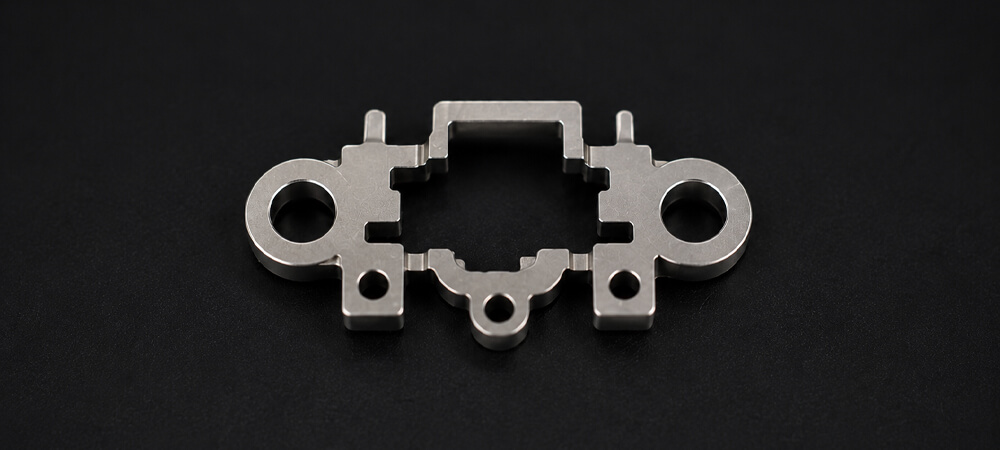
In advanced manufacturing, selecting the right joining method can directly influence product performance, reliability, and lifecycle cost. Engineers developing aerospace systems, defense platforms, semiconductor equipment, and thermal management solutions often evaluate multiple joining technologies, including brazing, welding, and adhesives, to determine which approach best meets demanding operational requirements.
While each joining method has its place, diffusion bonding is increasingly being selected for applications where conventional techniques introduce unacceptable compromises in strength, thermal performance, dimensional stability, or long-term reliability.
For many mission-critical assemblies, the decision is no longer simply about manufacturing preference. It becomes a performance requirement and, ultimately, a program-level risk decision. When failure is not an option, diffusion bonding frequently emerges as the preferred solution.
With extensive experience supporting high-performance industries and complex engineering requirements, Elcon Precision is prepared to provide diffusion bonding services for customers seeking reliable, high-integrity joining solutions that meet the most demanding application standards.
What Is Diffusion Bonding?
The diffusion bonding process is a solid-state joining process, often referred to as diffusion welding, that creates a metallurgical bond between materials through the application of controlled heat, pressure, and time.
Unlike brazing, diffusion bonding does not use a filler material, and unlike welding, it does not melt the base metals. Instead, two carefully prepared surfaces are brought into intimate contact under elevated temperature and pressure, allowing atoms to diffuse across the interface in the solid state. The process typically occurs in two stages: applied pressure first plastically deforms microscopic surface asperities to increase contact area, followed by thermally activated diffusion that eliminates remaining voids and enables grain growth across the interface. The result is a metallurgical bond that closely replicates the properties of the parent materials, with strength and performance approaching that of a continuous, unified structure.
The process is commonly performed in a vacuum diffusion bonding furnace or other tightly controlled environment, typically under vacuum or an inert gas atmosphere, to eliminate contamination, prevent oxidation of the bonding surfaces, and ensure bond integrity.
Key characteristics of diffusion bonding include:
- No filler materials
- Minimal thermal distortion
- High structural integrity
- Uniform bond lines
- Excellent dimensional accuracy
- Compatibility with complex geometries
- Ability to join similar and dissimilar materials, including titanium, aluminium alloys, copper, and nickel, without melting the base material
Because the process occurs below the melting point of the materials being joined, metal diffusion bonding can preserve material properties that may be altered by higher-energy joining methods. The process of diffusion follows concentration gradients as described by Fick's first law, with the rate influenced by the diffusion coefficient and temperature.
Diffusion Bonding vs Other Joining Methods
Engineers evaluating advanced joining methods often compare diffusion bonding with brazing, welding, and structural adhesives. A clear understanding of each process's limitations and potential failure modes is critical when selecting a method for high-reliability applications. Elcon Precision can help streamline this decision-making process, drawing on experience to reduce development friction and keep programs moving efficiently toward qualification and production.
Diffusion Bonding vs Brazing
Brazing relies on a filler metal that melts and flows into the joint interface. While brazing can be effective for many commercial applications and is often favored for mass production, diffusion bonding typically requires a longer bonding cycle, so the presence of filler material also introduces potential performance limitations.
Common challenges with brazed joints include:
- Voids within the bond region
- Incomplete filler flow
- Joint inconsistency
- Potential contamination
- Reduced performance at elevated temperatures
- Differences in thermal expansion between filler and base materials
- Greater complexity when used to join metals with very different properties, including some dissimilar metals
For aerospace, defense, and thermal management systems, these factors can become significant reliability concerns.
Diffusion bonding is also generally less suitable where high-volume throughput is the primary driver, since the bonding cycle can span several hours.
Diffusion bonding eliminates filler material entirely. Because the bond is formed directly between parent materials, engineers can achieve highly uniform joints with reduced void content and improved structural consistency.
When evaluating diffusion bonding vs brazing, diffusion bonding is often preferred for:
- High-temperature applications
- Vacuum environments
- High-pressure systems
- Microchannel heat exchangers
- Precision fluid management systems
- Long-life mission-critical assemblies
Diffusion Bonding vs Welding
Welding remains one of the most widely used joining technologies across manufacturing industries, but it is a broad category that differs from solid-state methods such as diffusion bonding, a form of solid state diffusion bonding. However, the localized melting required during fusion welding creates several challenges for precision and high-performance applications, and high temperatures can damage sensitive base material compared with a solid-state approach.
Potential welding-related concerns include:
- Heat-affected zones (HAZ)
- Residual stress
- Distortion and warping
- Microstructural changes
- Reduced dimensional accuracy
- Challenges with thin-wall components
These issues become increasingly problematic when working with tight-tolerance assemblies or lightweight structures.
Diffusion bonding avoids melting entirely, operating below the melting temperature, typically at an elevated temperature but without reaching the melting point of the base material. Avoiding molten metal helps reduce thermal stress and preserve material integrity and mechanical properties.
When comparing diffusion bonding vs welding, diffusion bonding is often advantageous for:
- Thin-wall assemblies
- Precision-machined components
- Multi-layer structures
- Complex internal flow paths
- Lightweight aerospace components
- Vacuum-tight assemblies
Diffusion Bonding vs Adhesives
Structural adhesives offer manufacturing flexibility and can simplify assembly processes. However, their performance limitations become apparent in demanding operating environments.
Common adhesive failure mechanisms include:
- Thermal degradation
- Environmental exposure
- Moisture absorption
- Outgassing
- Creep over time
- Limited structural load capacity
For semiconductor systems, aerospace hardware, and defense applications, these risks can create unacceptable reliability concerns.
Diffusion bonding produces a metallurgical bond that does not rely on organic materials and is not susceptible to many of the environmental degradation mechanisms associated with adhesives.
When comparing diffusion bonding vs adhesives, diffusion bonding is typically selected for:
- High-temperature applications
- Vacuum systems
- Hermetic assemblies
- High-load structures
- Long-duration service environments
- Contamination-sensitive systems
When Diffusion Bonding Is the Better Choice
Not every assembly requires diffusion bonding, and in many cases, other joining methods such as brazing, welding, or adhesives are entirely appropriate. However, certain design requirements, such as high thermal cycling, tight dimensional control, or long-term reliability, can make diffusion bonding a better fit. With decades of experience in advanced joining applications, Elcon Precision helps engineers evaluate when the process is most suitable and supports its implementation in demanding programs.
High-Strength and High-Reliability Systems for Dissimilar Materials
Applications subjected to extreme mechanical, thermal, or environmental conditions often require bond integrity that approaches the properties of the parent material, and diffusion bonding produces joints whose mechanical properties can approach those of the parent material in high-reliability service.
Tight-Tolerance Precision Assemblies
Minimal distortion makes the diffusion bonding process ideal for high-precision components and assemblies where dimensional control is critical.
Vacuum and Hermetic Environments
The absence of fillers, weld defects, and adhesive materials supports vacuum compatibility and hermetic sealing requirements.
Complex Internal Geometries
Diffusion bonding enables the creation of sophisticated internal structures that would be difficult or impossible to manufacture using traditional joining methods.
Examples include:
- Internal flow channels
- Microfluidic pathways
- Multi-layer stack assemblies
- Compact thermal management systems
High-Temperature and Mission-Critical Applications
When assemblies must maintain structural integrity under prolonged thermal exposure, diffusion bonding often provides superior performance compared to brazed or adhesive-based solutions.
Applications of Diffusion Bonding
Aerospace & Defense
Aerospace and defense programs increasingly utilize diffusion bonding to support lightweight, high-performance assemblies.
Common applications include:
- Structural components
- Thermal management systems
- Fluid control systems
- Sensor housings
- Vacuum-compatible hardware
- Advanced propulsion components
The process supports reliability requirements where mechanical failure could jeopardize mission success.
Heat Exchangers & Thermal Management
Diffusion-bonded heat exchangers are among the most widely recognized applications of the technology.
By bonding multiple layers into a monolithic structure, engineers can create:
- Microchannel heat exchangers
- High-surface-area thermal devices
- Compact cooling systems
- High-pressure thermal management assemblies
The resulting structures offer exceptional thermal efficiency while maintaining compact form factors.
Semiconductor Systems
Semiconductor manufacturing equipment often operates in highly controlled environments where contamination and outgassing must be minimized.
Diffusion bonding supports:
- Vacuum chambers
- Process equipment components
- Thermal management assemblies
- Precision structural elements
- Semiconductor diffusion bonding applications requiring ultra-clean performance
The process is particularly valuable when cleanliness and dimensional stability are critical.
Advanced Industrial Applications
Beyond aerospace and semiconductor markets, diffusion bonding supports a range of demanding industrial systems.
Examples include:
- Multi-layer assemblies
- High-pressure process equipment
- Corrosion-resistant structures
- Precision instrumentation
- Sensor packaging
- Chemically aggressive operating environments
Materials and Process Considerations
Successful diffusion bonding requires careful control of both materials and key process variables, with material selection playing an equally important role.
Commonly bonded materials include:
- Similar and dissimilar metals such as titanium, stainless steel, aluminum, copper, nickel, and refractory metals
- Ceramics and ceramic-metal combinations
- In some applications, thermoplastics used to bond materials such as polycarbonate and polyamide
High-quality results also depend on the pressure required and elevated processing conditions, which call for specialized equipment and precise control and can make the method more complex and costly than simpler joining techniques.
Achieving high-quality bonds requires attention to:
Surface Preparation
Surface cleanliness and flatness are critical because they help the two surfaces reach intimate contact, promoting atomic diffusion and bond integrity. Oxide layer contamination on metal surfaces can block direct contact and reduce bond quality.
Process Control
The diffusion bonding process depends on precise control of temperature and pressure, the primary variables that govern the bonding cycle:
- Temperature
- Pressure
- Time
- Vacuum conditions, with the controlled cycle often running for hours at an elevated temperature
- Furnace uniformity
It is usually performed at a constant temperature below the melting point of the base material, with exact conditions depending on the materials.
Alignment and Fixturing
Accurate component alignment is essential, particularly in assemblies containing microchannels, precision features, or multiple bonded layers.
Design for Manufacturability
Engineers should consider diffusion bonding requirements early in the design cycle to optimize:
- Bond area geometry
- Surface accessibility
- Material compatibility
- Thermal performance
- Inspection requirements
At this stage, materials science considerations are critical for selecting compatible materials and designing joints for reliable performance.
Why Aerospace & Defense Programs Choose Diffusion Bonding
In aerospace and defense applications, joining methods are often evaluated through the lens of risk reduction and lifecycle performance.
Diffusion bonding supports program objectives by enabling:
- Mission-critical reliability
- Weight reduction through integrated structures
- Improved thermal efficiency
- Vacuum compatibility
- Hermetic sealing performance
- Long-term structural stability
- Reduced failure modes compared to multi-step joining approaches
For many defense and aerospace assemblies, diffusion bonding becomes the preferred option because it removes several potential failure mechanisms associated with filler materials, weld defects, and adhesive degradation.
The result is a joining solution that aligns with both engineering requirements and program-level reliability objectives.
How Elcon Precision Supports Diffusion Bonding Applications
Elcon Precision provides advanced diffusion bonding expertise for organizations developing high-performance assemblies across aerospace, defense, semiconductor, and thermal management markets.
Core Capabilities
Elcon Precision supports:
- Advanced diffusion bonding solutions
- Vacuum diffusion bonding processes
- Ceramic-to-metal bonding
- Multi-layer stack assemblies
- Vacuum-tight components
- Hermetic sealing solutions
- Precision assemblies for mission-critical environments
Strategic Differentiation
Engineers turn to diffusion bonding when traditional joining methods create unacceptable performance compromises.
Elcon Precision specializes in applications where:
- Welding introduces distortion or heat-affected zones
- Brazing creates filler-related reliability concerns
- Adhesives fail under temperature, vacuum, or environmental exposure conditions
By focusing on high-integrity bonding solutions, Elcon helps customers address performance challenges that conventional joining technologies cannot adequately resolve.
Proven Experience in High-Reliability Industries
Organizations operating in aerospace, defense, and advanced manufacturing environments often require suppliers capable of supporting demanding program requirements and long-term reliability objectives.
Our experience at Elcon Precision includes supporting programs and applications associated with organizations such as:
- Leach
- AMETEK
- Javelin programs
- Stellant programs
- Natel
- Stinger applications
This experience reinforces the company's understanding of the technical, quality, and reliability expectations associated with mission-critical manufacturing environments.
Related Capabilities and Resources
Learn more about Elcon Precision's capabilities in:
- Aerospace manufacturing
- Semiconductor manufacturing
- Heat exchanger development
- Advanced materials processing
- Precision fabrication and etching
- Ceramic-to-metal bonding
- Hermetic sealing solutions
Additional expertise across related organizations includes:
- E-Fab for semiconductor and vacuum system applications
- PEI Aerospace for structural and thermal assemblies
- PEI Medical for titanium diffusion bonding applications
- Fotofab for advanced fabrication and materials expertise
Request a Quote for Diffusion Bonding Solutions
When performance requirements exceed the capabilities of brazing, welding, or adhesives, diffusion bonding may be the most effective path forward.
Whether you are evaluating joining methods for a new design, optimizing an existing assembly, or addressing reliability concerns in a mission-critical application, Elcon Precision can provide engineering guidance and manufacturing expertise.
Request a Quote
Discuss your project requirements and receive technical input on the most appropriate bonding solution for your application.
Speak with an Engineer
Connect directly with an engineering specialist to evaluate diffusion bonding feasibility, manufacturability considerations, material compatibility, and performance requirements.
