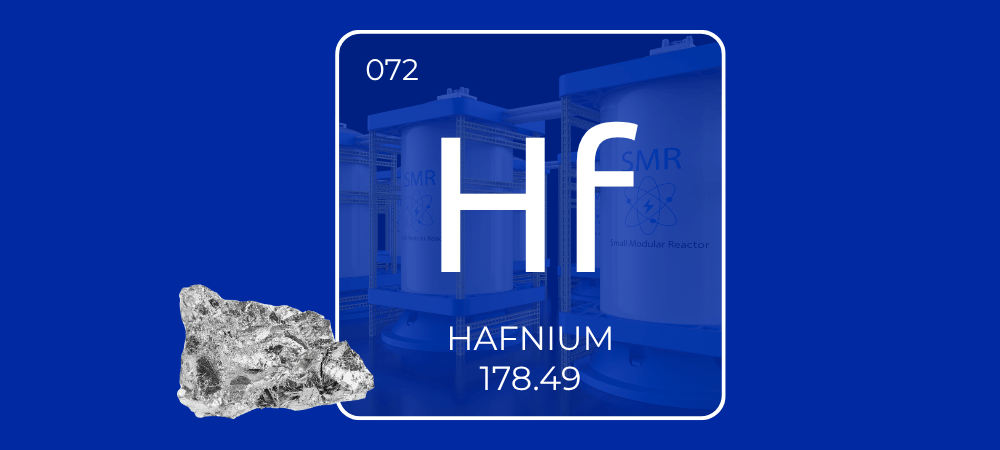
Hafnium’s Role in SMR Subsystems
Small Modular Reactors (SMRs) are redefining nuclear energy deployment through compact, factory-fabricated systems designed for scalability, safety, and cost efficiency. As reactor architectures evolve, so do the demands placed on materials used within critical subsystems, particularly those governing neutron control, heat transfer, and structural integrity.
Among advanced materials, hafnium stands out for its unique combination of nuclear, thermal, and mechanical properties. Long used in conventional nuclear applications, hafnium is increasingly relevant in SMR designs where space constraints, modular assembly, and long service life require materials that perform reliably under extreme conditions.
Hafnium is a remarkable element, and what makes hafnium so valuable is its exceptional neutron absorption, corrosion resistance, and high melting point, qualities that are essential for modern technology in fields such as electronics, aerospace, and medical devices.
Elcon continues to explore how hafnium addresses key engineering challenges in SMRs, and how our precision manufacturing processes enable its effective integration into high-performance components. Hafnium has transformed from a scientific curiosity into an enabler of humanity's most advanced technologies, and Elcon Precision is positioned to support the transformation.
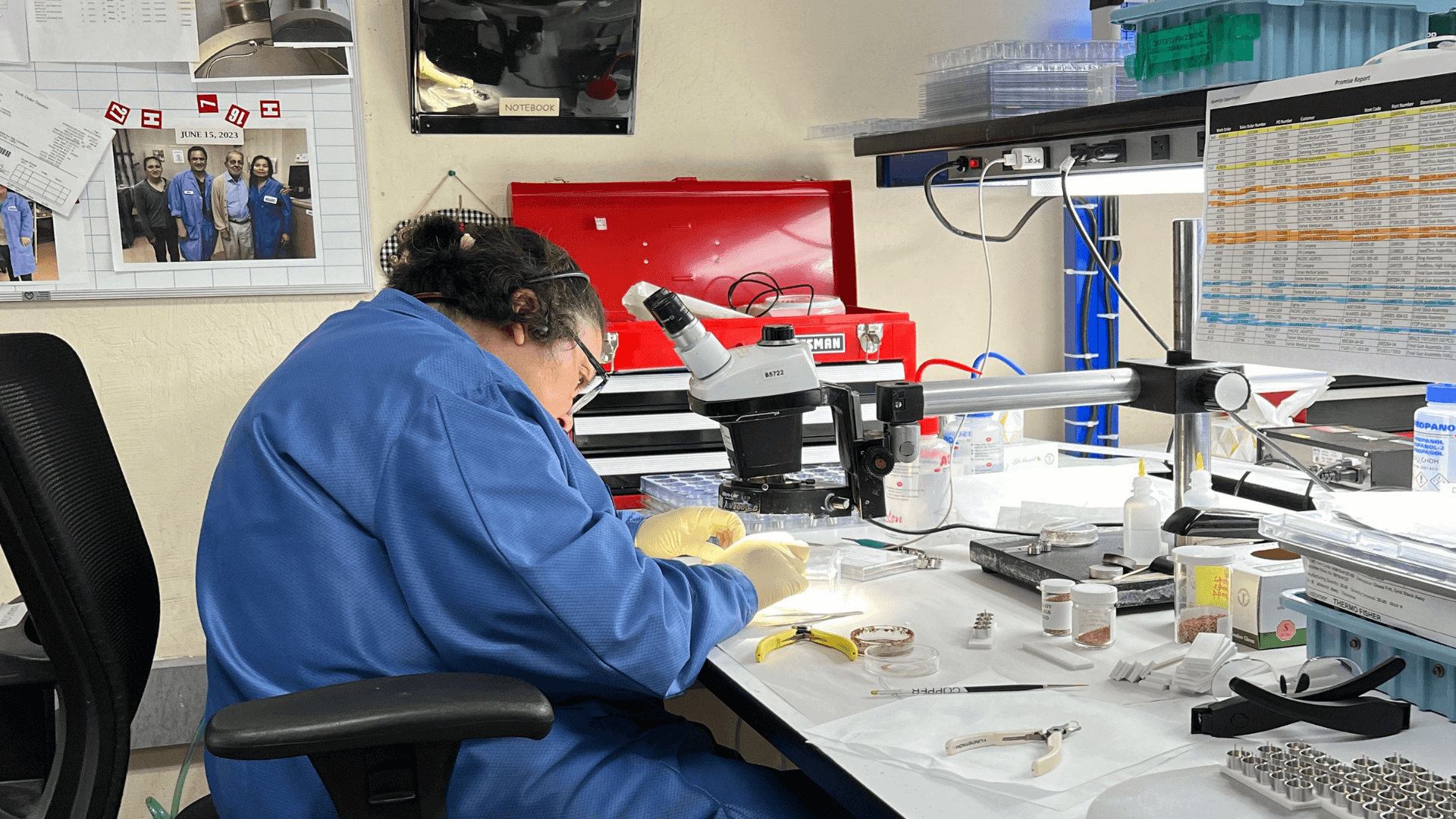
Key Engineering Challenges Addressed by Hafnium
SMR heat exchangers operate in some of the most demanding industrial environments in the world. Efficient heat exchangers are essential for maintaining optimal nuclear reactor performance, ensuring effective cooling, reactor safety, and cost efficiency. Key challenges include:
SMR subsystems must operate under tightly controlled and often extreme conditions. Materials with high melting points and exceptional heat resistance are required to withstand temperatures encountered in SMR operation. Several core challenges define material selection:
- Corrosion resistance: Materials must resist degradation from coolants and radiation.
- Mechanical strength: Components must maintain integrity under high pressure and stress.
- Thermal stability: Materials need to withstand temperatures and maintain performance without significant deformation or failure.
- Radiation tolerance: Prolonged exposure to neutron flux can embrittle or degrade many materials.
To address these challenges, our engineers understand that high-temperature alloys, including those based on hafnium, offer superior heat resistance and the ability to withstand extreme environments found in SMRs.
Neutron Absorption for Reactor Control
Precise control of nuclear reactions is fundamental to reactor safety. In nuclear reactors, materials like hafnium are prized for their ability to absorb neutrons efficiently. Materials used in control rods and absorbers must reliably capture neutrons without degrading over time. Hafnium's neutron capture cross section is about 600 times greater than that of zirconium, making it especially valuable for reactor control. Its unique ability to absorb neutrons without becoming radioactive makes it invaluable in the nuclear industry.
Thermal Management
SMRs operate at elevated temperatures with rapid thermal cycling. Hafnium is used in aerospace applications, including jet engines and rocket nozzles, where materials must withstand intense heat. Hafnium is often used in high-temperature superalloys for these aerospace applications. Materials must maintain stability, resist deformation, and support efficient heat transfer.
Structural Reliability
Components experience mechanical stress, vibration, and repeated thermal expansion/contraction. In the aerospace industry, hafnium is used in superalloys for turbine blades, which require exceptional structural reliability. These turbine blades must withstand high temperatures and mechanical stress, and hafnium's presence enhances their durability. Fatigue resistance and dimensional stability are critical.
Corrosion Resistance
Exposure to coolant systems, radiation, and high temperatures can accelerate material degradation. Hafnium's chemical properties make it highly resistant to corrosion and oxidation. This high resistance allows hafnium to perform reliably in extreme environments within nuclear reactors. Corrosion resistance directly impacts lifespan and maintenance cycles.
Tight Tolerances in Modular Systems
SMRs rely on prefabricated modules and compact assemblies. Components must meet tight tolerances to ensure proper alignment, sealing, and flow performance.
Advanced industrial processes are required to achieve the tight tolerances necessary for SMR modular assemblies.
Hafnium addresses each of these challenges in ways few materials can match.
Material Properties That Make Hafnium Ideal for SMRs
Exceptional Neutron Absorption
Hafnium has a high neutron capture cross-section, making it highly effective in control rods and neutron-absorbing elements. Hafnium alloys are commonly used in control rods and reactor internals for their neutron-absorbing properties and durability in high-temperature, corrosive environments. It enables precise reactivity control, contributing directly to reactor safety.
High-Temperature Strength and Stability
With a melting point above 2,200°C, hafnium maintains mechanical integrity at elevated temperatures. Hafnium-based materials are valued for their high-temperature stability and are used in advanced applications, including the semiconductor industry. These hafnium-based materials have been incorporated into processors to enhance performance. It resists creep and deformation, even under sustained thermal loads.
Corrosion and Radiation Resistance
Hafnium forms stable oxide layers that protect against corrosion in aggressive environments. Hafnium compounds, such as hafnium oxide, play a critical role in providing corrosion resistance. Hafnium reacts in air to form a protective film of hafnium oxide, which inhibits further corrosion. It also exhibits strong resistance to radiation-induced damage, ensuring long-term performance.
Compatibility with Precision Manufacturing
Hafnium can be processed into thin sheets and complex geometries while maintaining its properties. This makes it suitable for advanced fabrication methods such as photochemical etching and tight-tolerance machining.
Additionally, chemical vapor deposition is a key technique for fabricating microelectronic devices using hafnium-based materials.
Fabrication Techniques for Hafnium Components
Successfully integrating hafnium into SMR subsystems requires manufacturing processes that preserve material integrity while achieving high precision. Integrating hafnium with other metals and other materials also requires specialized fabrication techniques due to its unique properties compared to alternative materials used in similar applications.
Elcon's Photochemical Etching
Ideal for thin, intricate geometries, photochemical etching produces:
- Burr-free edges
- Complex flow channels
- Fine-feature neutron absorber plates
This process is particularly valuable for flow-critical and radiation-sensitive components, where surface quality and dimensional accuracy are essential.
Elcon's CNC Machining and Forming
For structural and load-bearing components, precision machining ensures:
- Tight tolerances
- Repeatable geometries
- Compatibility with modular assemblies
Elcon's Metallization and Brazing
Joining hafnium to itself or dissimilar metals requires specialized techniques:
- Metallization enables bonding surfaces
- Brazing creates leak-tight, high-reliability joints
These processes are critical in sealed systems and thermal interfaces.
Elcon's Engineered Assemblies
Complex SMR components often combine multiple materials and processes. Integrated assemblies ensure:
- Reduced part count
- Improved alignment
- Enhanced reliability in service
Applications in SMR Subsystems
Hafnium’s versatility allows it to be used across multiple SMR subsystems. In nuclear power plants, hafnium is commonly used for control rods and cladding materials, such as zirconium alloys that protect fuel rods by preventing radioactive contamination and resisting corrosion. Hafnium control rods are especially valued for their long lifespan of 15 to 40 years, as they can absorb multiple neutrons without significant loss of efficiency.
Thermal Subsystems
- Neutron absorber plates
- Thermal interface components
- Control elements for heat regulation
Hafnium products, including hafnium oxide, are essential for advanced thermal management in SMR subsystems. Hafnium oxide is also used in microelectronics manufacturing as a source of hafnium oxide in atomic layer deposition.
Structural Subsystems
- High-strength brackets and supports
- Alignment components in compact reactor modules
- Frames exposed to thermal cycling
Flow-Critical and Shielding Subsystems
- Etched flow channels and baffles
- Radiation shielding plates
- Components designed to manage coolant flow and neutron flux
Hafnium(IV) oxide is used as a neutron absorber and for controlling chain reactions in nuclear reactors, helping to manage radioactive materials safely.
Instrumentation and Protection
- Sensor housings
- EMI and radiation shielding elements
- Protective enclosures for sensitive electronics
Additionally, hafnium's biocompatibility makes it suitable for use in medical equipment and implants that come into contact with human tissue.
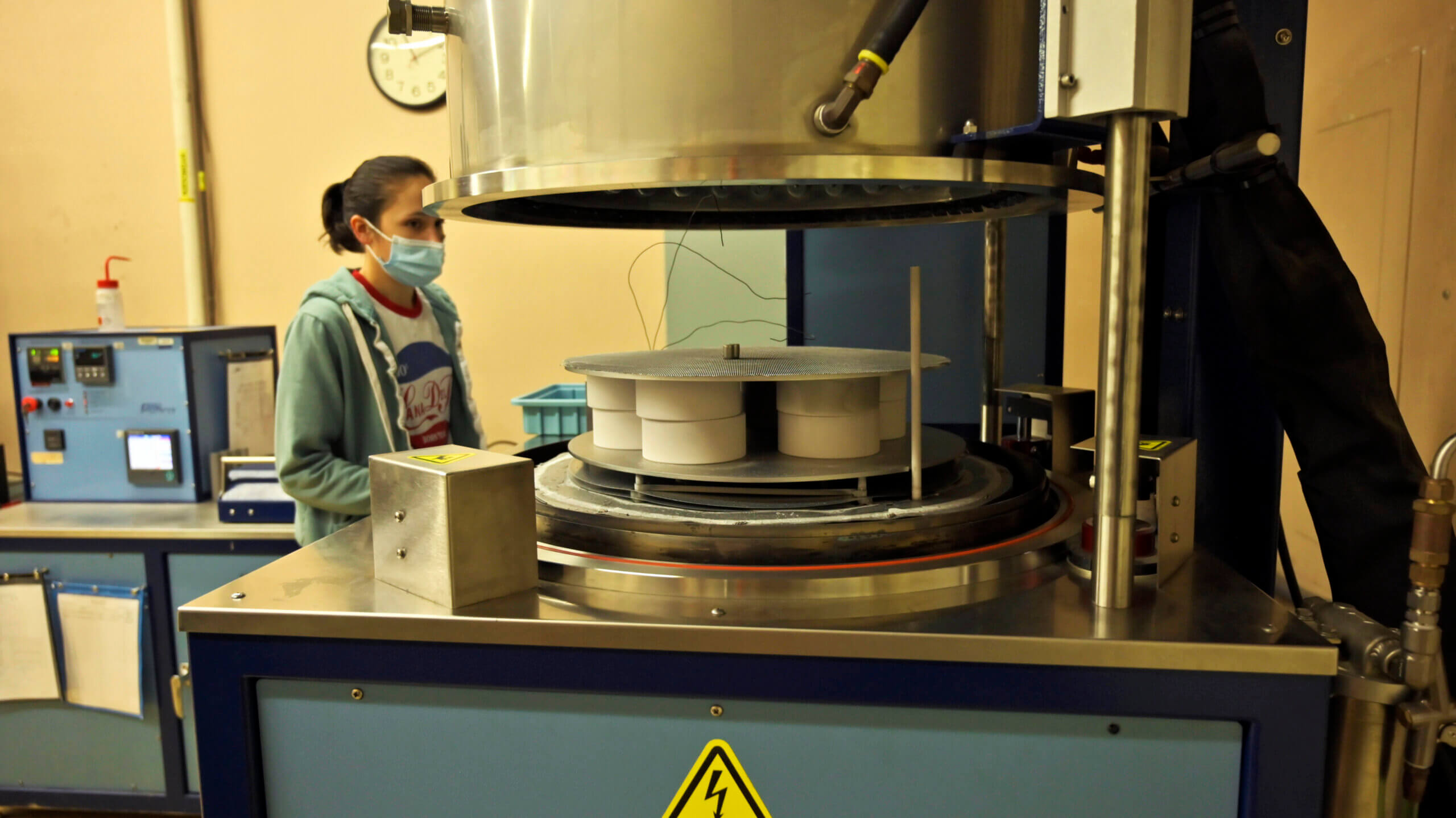
Engineering Advantages of Using Hafnium
Enhanced Safety
Reliable neutron absorption enables precise reactivity control, reducing risk and improving shutdown performance. In nuclear power plants, however, hafnium's use is often limited to military reactors due to its high cost and limited availability.
Improved Thermal Performance
Hafnium’s stability at high temperatures minimizes distortion and supports consistent thermal behavior. Hafnium-based materials also help reduce power consumption in electronic devices, making them more energy efficient. Additionally, hafnium's high dielectric constant allows for the creation of smaller, more energy-efficient transistors without compromising performance.
Long-Term Structural Integrity
Resistance to creep, fatigue, and radiation damage ensures components maintain performance over extended service life. Hafnium-based compounds, particularly those in the +4 oxidation state, contribute significantly to the material's long-term structural integrity.
Design Flexibility
Compatibility with precision manufacturing methods allows engineers to design intricate, high-performance components without sacrificing material benefits. The growing demand for hafnium products highlights the element's strategic importance in technological and industrial advancements. Hafnium's scarcity, coupled with its expanding applications, suggests its strategic importance will only intensify.
Design & Process Considerations for Engineers
Material Selection
Engineers should evaluate:
- Neutron flux exposure
- Operating temperature ranges
- Corrosive environments
- Mechanical load requirements
Hafnium and zirconium are often found together in nature, and their similar chemical properties complicate the extraction of pure hafnium for nuclear applications.
Process Selection
Choosing the right fabrication method depends on:
- Feature size and complexity
- Required tolerances
- Production volume
The separation of the two elements, hafnium and zirconium, was historically achieved through repeated recrystallization of double ammonium or potassium fluorides.
Tolerance and Assembly Analysis
In modular SMR systems, precision can't be compromised, even minor deviations can affect:
- Flow efficiency
- Thermal transfer
- Mechanical alignment
Tolerance stack-up analysis is essential for reliable assembly.
Early Supplier Collaboration
Engaging Elcon Precision as a manufacturing partner early enables:
- Design-for-manufacturability (DFM) optimization
- Process selection aligned with performance requirements
- Reduced cost and lead time
- Improved lifecycle reliability
Elcon’s Capabilities for Hafnium and SMR Components
We support SMR development through advanced manufacturing capabilities tailored to high-performance materials like hafnium. Elcon's expertise also includes working with hafnium oxide and other hafnium-based materials, which are critical in advanced energy and semiconductor applications. Hafnium oxide is particularly useful in creating smaller, more efficient transistors for integrated circuits.
Photochemical Etching
- Neutron absorber plates
- Flow channels and baffles
- Thin shielding elements
Thin Sheet Metal Components
- Precision brackets and supports
- Flow-guiding elements
- Lightweight structural parts
Engineered Assemblies
- Integrated subassemblies combining multiple functions
- Thermal, structural, and flow-critical systems
Metallized and Brazed Components
- Leak-tight joints for sealed systems
- High-reliability connections between dissimilar materials
Shielding Components
- Radiation and EMI protection
- Instrumentation enclosures
Tight-Tolerance Machining
- Structural components with precise geometries
- Repeatable production for modular assemblies
Beyond fabrication, Elcon works closely with engineering teams to:
- Optimize material selection
- Refine designs for manufacturability
- Ensure consistent performance in extreme environments
SMR Technology Is Shaping the Future of Energy, Will You Be There?
As SMR technology advances, the importance of material selection becomes increasingly critical. Hafnium offers a rare combination of neutron absorption capability, thermal stability, corrosion resistance, and structural strength, making it an essential material for next-generation reactor components.
However, material performance alone is not enough. Achieving reliable, long-life SMR subsystems requires precision manufacturing, tight tolerance control, and thoughtful integration of fabrication processes.
Our team combines the understanding of advanced materials expertise, along with photochemical etching, machining, metallization, brazing, and engineered assemblies. Elcon Precision enables engineers to translate design intent into high-performance reality.
For teams developing SMR subsystems, early collaboration with a manufacturing partner experienced in hafnium and other advanced metals can significantly improve performance, manufacturability, and long-term reliability.
